

Quiet Lines of Time
Hiroshi Sugimoto - Water Mill - Photography
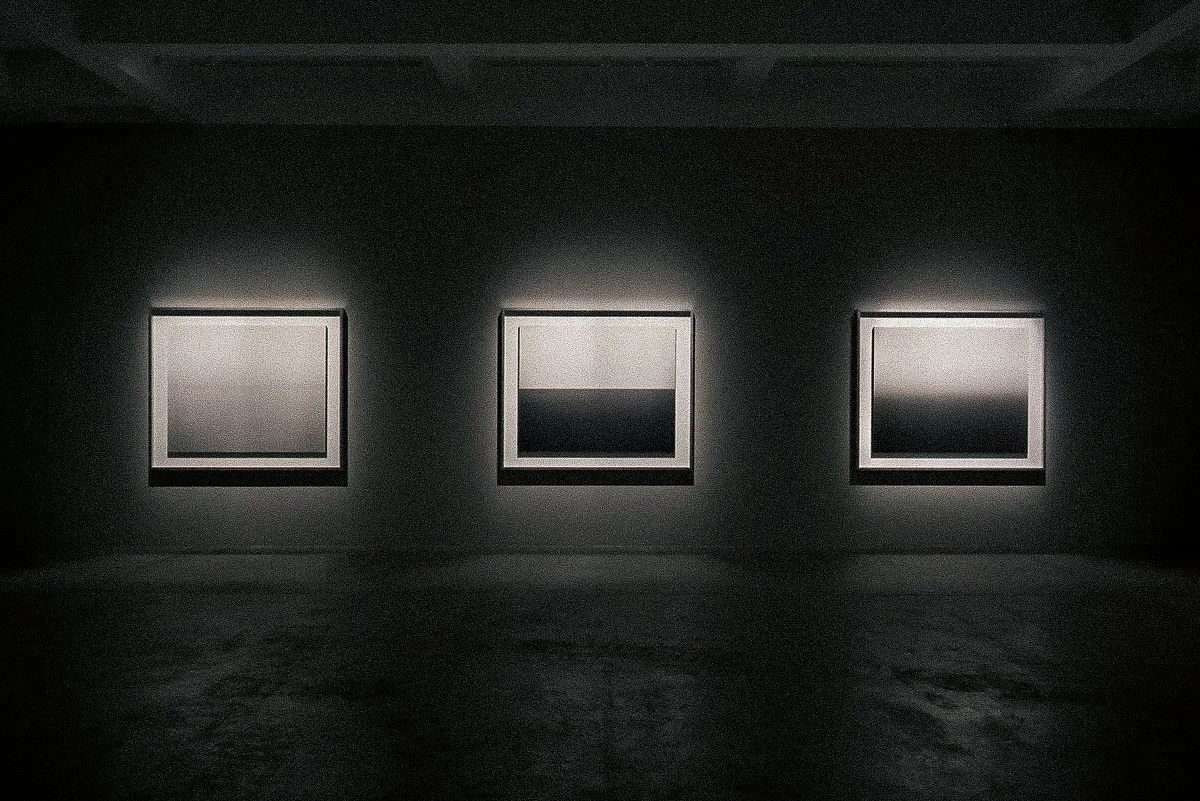
Hiroshi Sugimoto is a Tokyo and New York–based artist whose photographic practice explores the relationship between time, perception, and memory. Known for his use of long exposure and formal restraint, his work draws from architectural geometry, philosophical thought, and analog precision. The sea, the lens, and the horizon are recurring instruments across his four-decade archive. Each image he creates is both document and question. A fixed surface that opens onto something slower and less certain.
Sugimoto’s Time Exposed: Seascapes, on view this winter at the Parrish Art Museum, offers a distilled encounter with rhythm and stillness. The series presents 50 seascapes, each taken from a different global coastline. Every photograph is anchored by a perfect horizon line. One half water. One half sky. No human activity. No timestamp. Only the meeting of light, motion, and surface.
INTERVAL’s winter lens turns to warmth as a form of comprehension. Here, warmth does not arrive through texture or closeness but through the deliberate structure of attention. Sugimoto’s exposures often last over an hour. Each photograph becomes an imprint of duration. The image is less a moment captured, more a plane held open.
In this seasonal context, where the external world speeds up toward endings and beginnings, Time Exposed remains unmoved. It suggests that slowness is not passive. It is a technique. An active design. The works do not offer resolution. They offer rest without inertia. Attention without excess. Winter, viewed through these images, becomes less about waiting and more about tuning.
What matters here is not narrative. It is calibration. Light shifts but does not flare. The water stirs but never breaks. The photograph becomes a mirror for the viewer’s own interior pace. It asks less to be seen, and more to be absorbed.
Sugimoto’s practice is rooted in both Japanese and Western conceptual lineages. His visual discipline resonates with the sparseness of sumi-e painting and the atmospheric restraint of traditional landscape scrolls. His philosophical method and use of seriality align with figures in Western conceptual and minimalist traditions. On Kawara, Donald Judd, Agnes Martin.
Rather than document the world’s visual variety, Sugimoto examines its visual constants. Across the Seascapes, we see a global survey without variation. Every ocean edge returns the same horizon. The photograph becomes a measure of sameness across place and time. His work also invites quiet comparison with artists like James Turrell or Roni Horn. These figures also use light, weather, and repetition to test perception. Where theirs is immersive or elemental, Sugimoto’s is measured and architectural. His medium is distance.
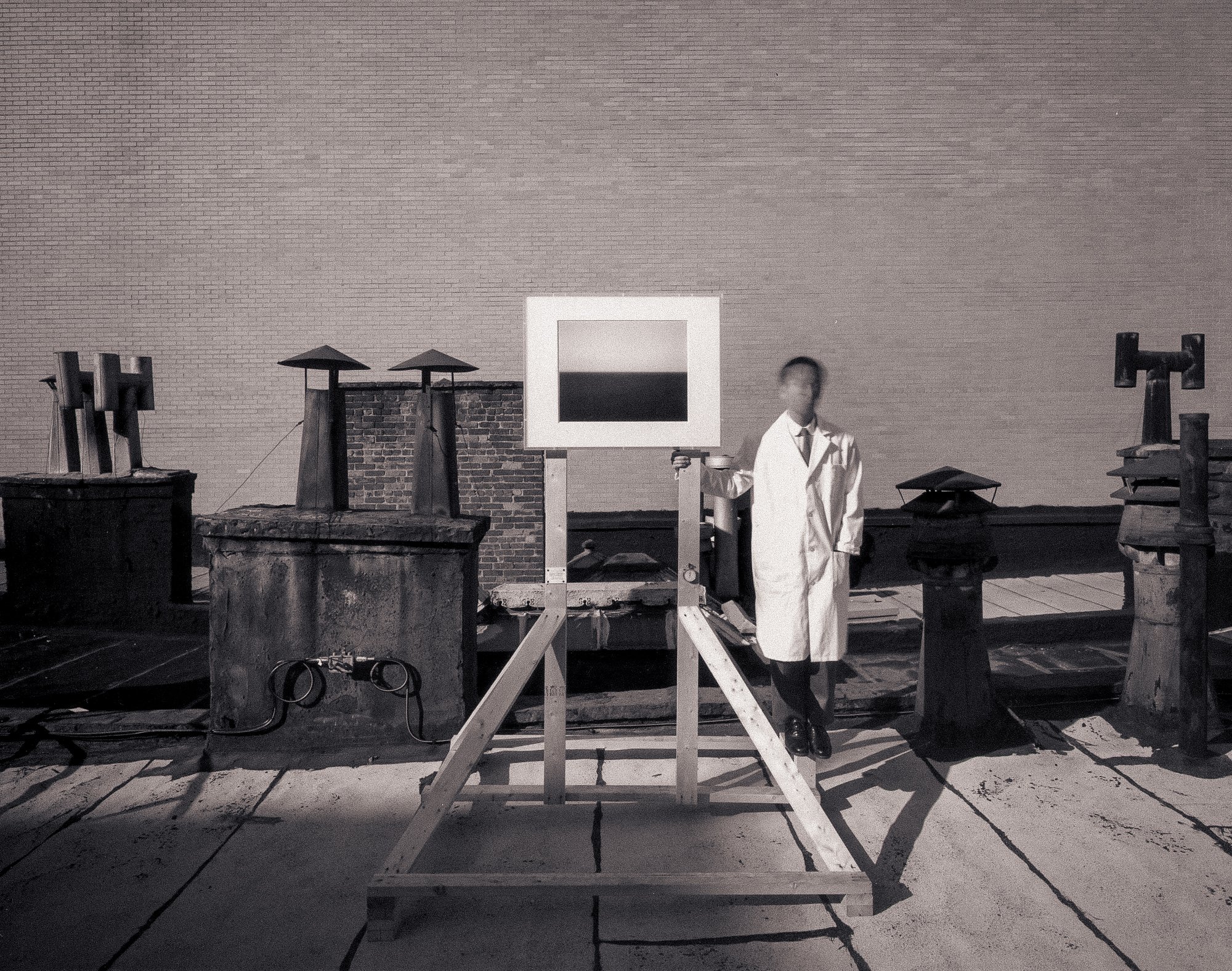
Place
While photographed in Iceland, the North Sea, the Aegean, and beyond, these seascapes resist placehood. Each becomes a generic horizon, untethered from context yet grounded in atmosphere. In an urban winter, where sensory input is fractured, these works behave like external lungs. They give readers a frame of reference for the edge of perception.
Home
In the home, Sugimoto’s photographs function more like thresholds than décor. Their tonality is cool, but not cold. Hung on a domestic wall, they generate a quiet perimeter that buffers interior noise. They restore the room’s proportions. Their visual temperature holds the space.
Body
These works do not stimulate the viewer. They regulate them. The eyes linger, unfocused. The pulse slows. The image does not shift, but the viewer’s attention does. Looking becomes a ritual, not a task. In winter, this recalibration matters. It protects the body from acceleration. It offers stillness not as retreat, but as alignment.
Seasonal Principle
Stillness Holds the Line
Stillness is not emptiness. It is a design of duration. Sugimoto’s work shows that minimal action, held with care, generates depth. In a season defined by re-entry and rebalancing, this becomes not just a mood. It becomes a method.
Apply This
Study one of Sugimoto’s seascapes. Notice how your breathing shifts.
Read his statement on the series. Focus on how he describes time as invisible structure.
Light a candle and observe the wall. Track the glow as it moves through space.
Return to the same outdoor location each morning. Notice what does not change.
Place a horizon image near your desk or bed. Use it as a daily visual anchor.